
What Is a Coating Mechanism?
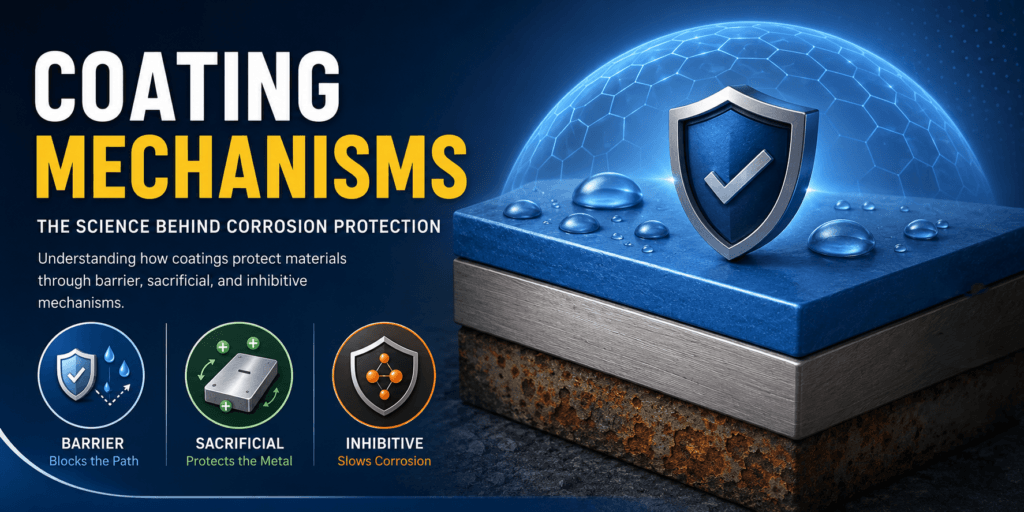
- A coating mechanism refers to the method by which a coating protects a substrate from corrosion, moisture, chemicals, oxygen, salts, and environmental deterioration.
- When metal, oxygen, and water come into contact, an electrochemical cell forms, and the subsequent reactions corrode the metal.
- Corrosion prevention and control, therefore, focus on eliminating one or more of these components.
- From the moment steel is manufactured, it already contains three of the four required components. The only component missing is the water or electrolyte.
Coating Mechanisms: How Protective Coatings Work
- Protective coatings are one of the most effective methods used to prevent corrosion and extend the service life of steel structures, pipelines, storage tanks, offshore platforms, marine equipment, and industrial assets.
- However, coatings do not protect surfaces in the same way. Different coating systems use different protection methods known as coating mechanisms.
- Understanding coating mechanisms is essential for coating inspectors, engineers, contractors, and asset owners because selecting the correct coating system depends on how the coating provides protection.
- The three primary coating mechanisms used in industrial protective coatings are:
- Barrier Protection Mechanism
- Sacrificial Protection Mechanism
- Inhibitive Protection Mechanism
- Each mechanism provides corrosion protection in a different way and is suitable for different service environments.
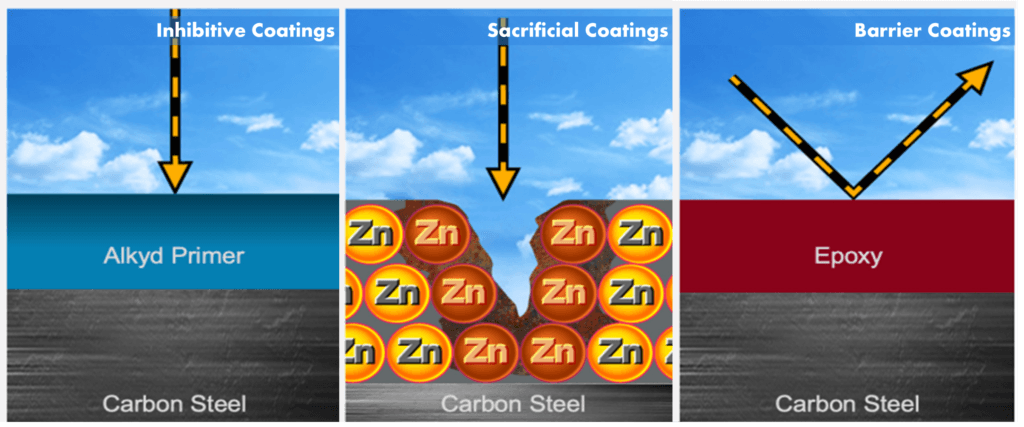
1. Inhibitive Coatings
- Inhibitive coatings act as a barricade, actively slowing down the reaction at the anode, cathode, or both. To achieve this, inhibitive coatings contain special pigments (i.e., chromates and phosphates) that react with any moisture or oxygen entering into the coating itself.
- The reaction of these pigments pacifies the steel by triggering the coating to form a hard, non-reactive surface film that then interferes with the corrosion process.
- Inhibitive coatings must be applied directly to the substrate as a primer. They are typically applied on structures exposed to atmospheric conditions.
- Because the pigments draw water into the coating to activate the chemical reaction, inhibitive coatings are not used in immersion conditions as the addition of water into the coating causes the film to blister.
- When using inhibitive coatings, always be sure to check for compatibility with any other coatings that may be applied to the substrate, as some coatings will not adhere to inhibitive coatings. For example, applying a solvent-based coating over a water-based inhibitor may cause the inhibitive coating to dissolve, rendering it ineffective.
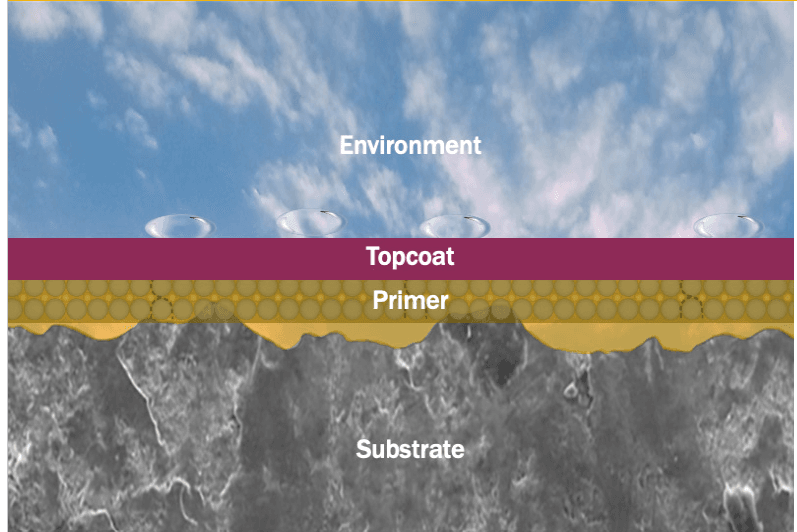
Inhibitive pigments are commonly incorporated into the following coatings: Epoxies, alkyds, and urethanes.
- Oil and solvent-based inhibitive coatings have heavy films and water-repellent properties.
- Water-based inhibitive coatings decrease the metal’s susceptibility to oxidation and have a long lifespan under normal conditions.
Common Corrosion Inhibitors
- Zinc Phosphate: One of the most widely used anti-corrosive pigments in modern coatings.
- Calcium Borosilicate: Provides environmentally friendly corrosion inhibition.
- Organic Corrosion Inhibitors: Commonly used in water-based coating systems.
2. Sacrificial Coatings
- Sacrificial coatings are coatings that are more active than the metal surface they protect.
- Sacrificial coatings contain a metal, usually zinc, that is anodic to steel, which corrodes preferentially.
- In other words, when in the presence of an electrolyte, the zinc contained within the coating itself will corrode instead of the steel.
- As long as the coating is applied directly to the substrate (i.e., primer), it will act as a sacrificial anode or barrier across the entire substrate it is protecting.
- Essentially, sacrificial coatings provide cathodic protection. This is especially beneficial whenever a scratch or other damage exposes the steel to air and moisture, as the zinc coating will always tarnish and corrode first.
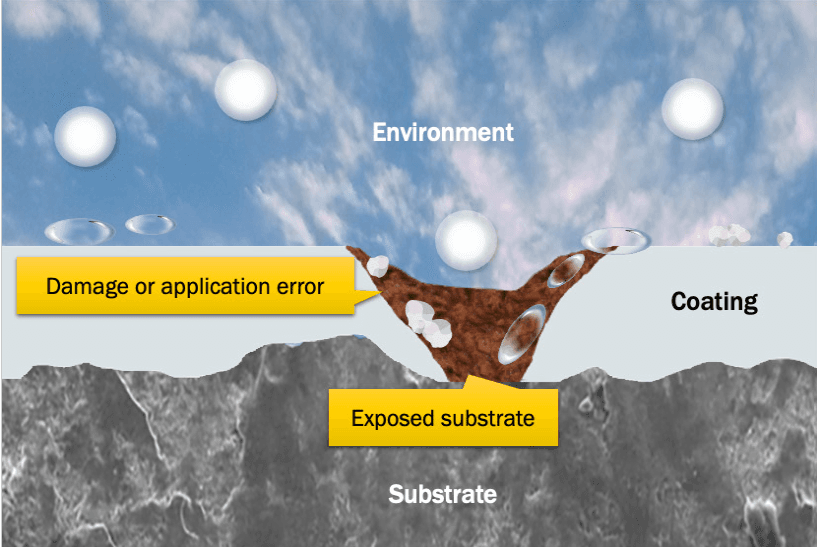
- Sacrificial coatings are often applied to substrates that are exposed to elevated heat or high temperatures and are commonly used in the automotive and aviation industries.
Types of Sacrificial Coatings
- Inorganic Zinc Silicate Coatings: Provide excellent cathodic protection and high-temperature resistance.
- Organic Zinc-Rich Primers: Widely used in industrial coating systems.
- Zinc Epoxy Primers: Combine barrier and sacrificial protection mechanisms.
3. Barrier Coatings
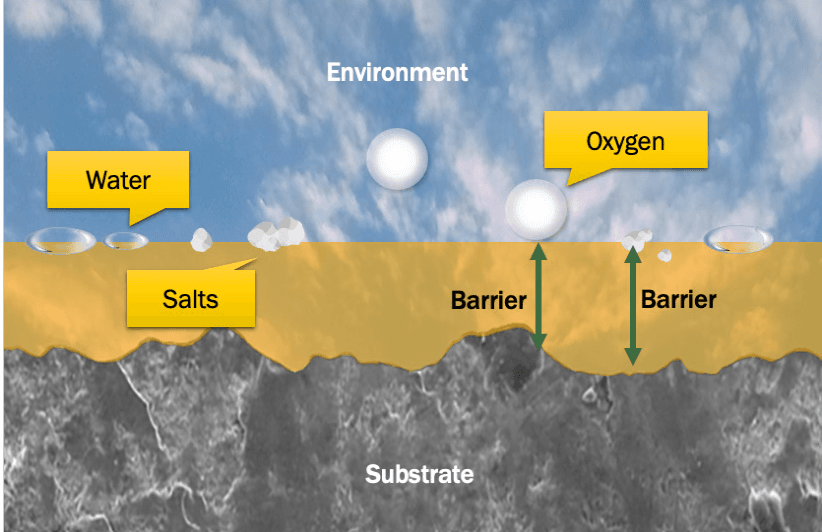
- As the name indicates, barrier coatings protect the substrate by providing a chemical and physical barrier between the metal substrate and the environment.
- This barrier prevents water, oxygen, and other corrosive agents like salt from coming in contact with the substrate.
- Barrier coatings prevent the migration of an electrolyte, thus removing one of the elements of the corrosion cell, which in turn prevents corrosion from occurring.
- Barrier coatings provide a physical and chemical barrier that retards moisture permeation but cannot eliminate moisture permeation and contaminants, such as salts, even when they are applied correctly.
- Barrier coatings are typically applied on substrates that are unable to withstand very harsh operating and/or environmental conditions.
They can be formulated to contain a range of desired properties, including:
- Resistance to the passage of air, water, oxygen, carbon dioxide, heat, and ultra-violet light through the film.
- Good adhesion to the underlying surface.
- Ability to wet the surface during application to prevent voids in the film and maximize effective surface area.
- Stability – ability to form a solid film.
- Abrasion and vibration resistance
Common barrier coatings
- Epoxy Coatings: Epoxy coatings are widely used because of their excellent adhesion, chemical resistance, and dense film structure.
- Glass Flake Epoxy Coatings: Glass flakes create a tortuous path that slows moisture penetration.
- Vinyl Ester Coatings: Provide strong chemical and moisture barrier properties.
- Polyurethane Coatings: Often used as topcoats to provide weather and UV resistance.
Conclusion
- Protective coatings prevent corrosion through different coating mechanisms depending on their formulation and intended service conditions.
- Barrier coatings isolate the substrate from corrosive elements, sacrificial coatings provide electrochemical protection through galvanic action, and inhibitive coatings chemically slow down corrosion reactions.
- Modern industrial coating systems often combine these mechanisms to achieve superior long-term protection in aggressive industrial and marine environments.
- Understanding coating mechanisms is essential for selecting suitable coatings, improving coating performance, reducing maintenance costs, and ensuring long-term asset reliability.
