
Press ESC to close
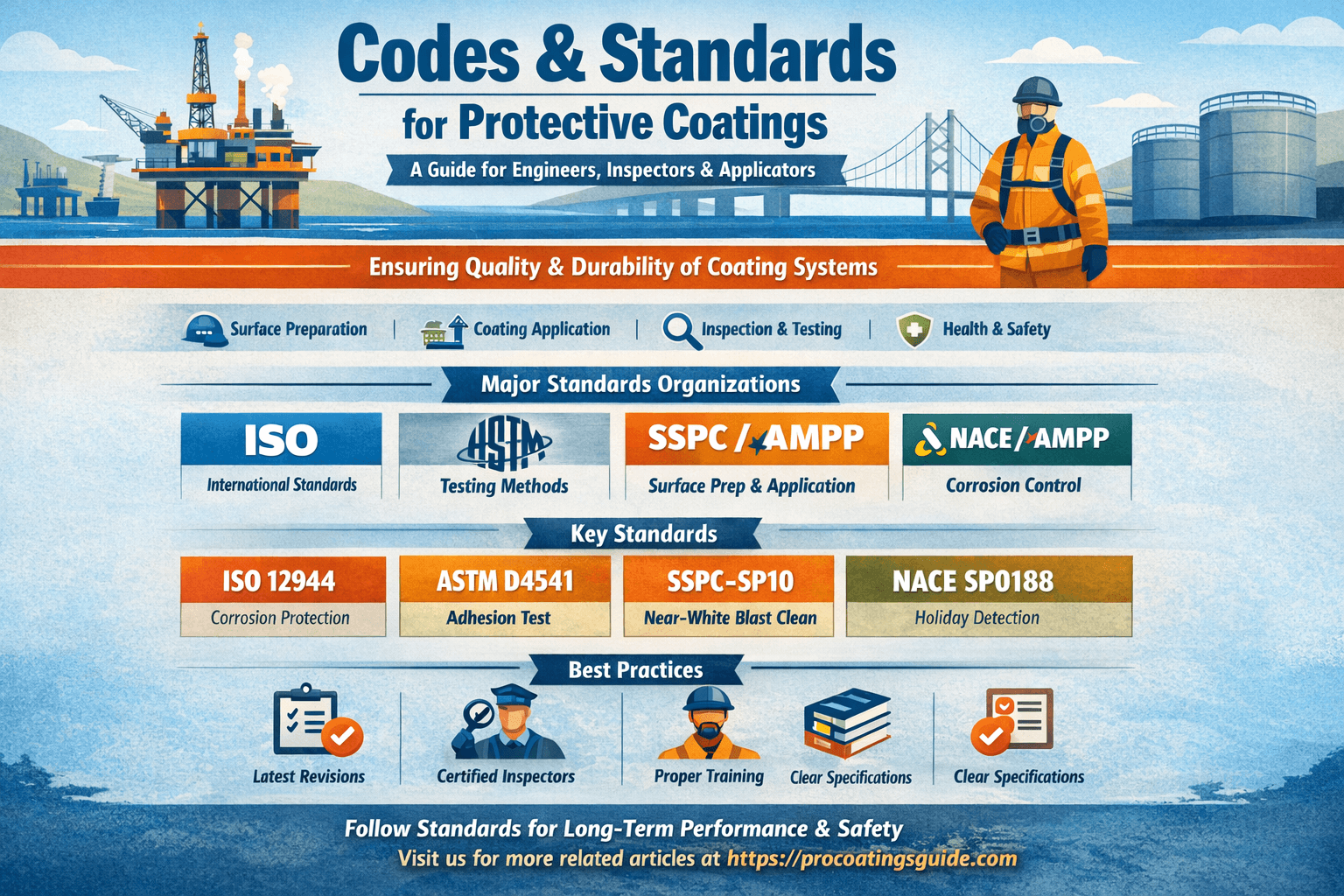
Codes and Standards for Protective Coatings
Protective coatings play a critical role in safeguarding assets against corrosion, chemical exposure, and environmental degradation. However, achieving long-term performance is only possible when coatings are applied and inspected in accordance with recognized codes and standards.
This guide provides a clear overview of the most widely used international standards governing protective coatings.
Why Codes and Standards Matter
Codes and standards ensure:
1. Consistent quality of surface preparation and coating application
2. Improved coating performance and durability
3. Enhanced safety and compliance
4. Clear communication between client, contractor, and inspector
Without standardized guidelines, coating failures, rework, and costly maintenance become more likely.
Different Codes and Standards for Protective Coatings:
ISO
ISO stands for International Organization for Standardization. ISO standards are globally recognized and widely adopted across industries. Here are lists of ISO standards for Protective Coatings.
-
1
ISO 8501 – Visual Assessment of the Surface Cleanliness
-
2
ISO 8501-1 : Rust grades and preparation grades of uncoated steel substrates and of steel substrates after overall removal of previous coatings
-
3
ISO 8501-2 : Preparation grades of previously coated steel substrates after localized removal of previous coatings
- 4
ISO 8501-3 : Preparation grades of welds, edges and other areas with surface imperfections
- 5
ISO 8501-4 : Initial surface conditions, preparation grades and flash rust grades in connection with high-pressure water jetting
- 6
ISO 8502 - Tests for the assessment of surface cleanliness;
- 7
ISO 8503 - Surface roughness characteristics of blast-cleaned steel substrates;
- 8
ISO 8504 - Surface preparation methods
ASTM
ASTM International standards (formerly American Society for Testing and Materials) are used globally. ASTM provides detailed testing and material standards for coatings. Key standards are as follows,
List Item #1
List Item #2
List Item #3
SSPC
SSPC primarily stands for The Society for Protective Coatings. Founded in 1950 as the Steel Structures Painting Council, it is a leading organization for industrial coating standards, training, and certification.
List Item #1
List Item #2
List Item #3
NACE
NACE traditionally stands for the National Association of Corrosion Engineers. Founded in 1943, it is the premier global authority on corrosion control, protective coatings, and materials performance. In 2021, NACE International merged with SSPC to become AMPP (Association for Materials Protection and Performance).
List Item #1
List Item #2
List Item #3
Stay Connected
Visit our website for more in-depth articles:
👉 https://procoatingsguide.com