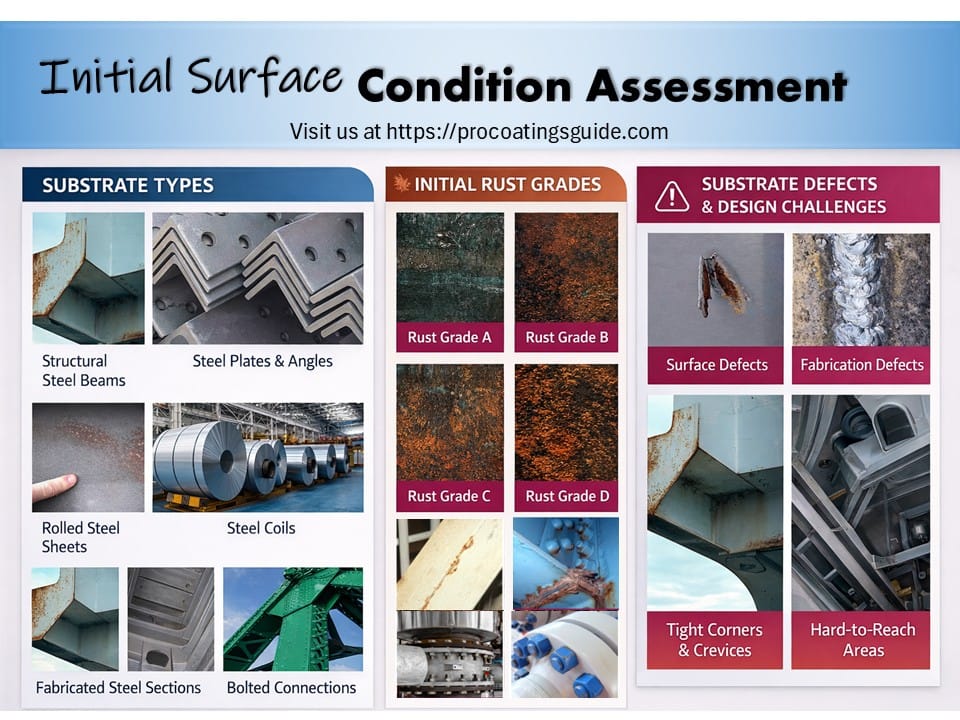
Surface preparation is the foundation of any successful coating system. No matter how advanced or expensive your coating is, its performance largely depends on how well the surface is prepared.
In industries like oil & gas, marine, infrastructure, and fabrication, improper surface preparation is one of the leading causes of coating failure. This guide explores the types of surface preparation methods, their applications, and how to select the right one.
Why Surface Preparation is Critical :
Before diving into methods, it’s important to understand what surface preparation achieves:
- Removes contaminants (oil, grease, salts, dust)
- Eliminates rust and mill scale
- Creates surface roughness (anchor profile)
- Ensures proper coating adhesion
- Enhances coating lifespan
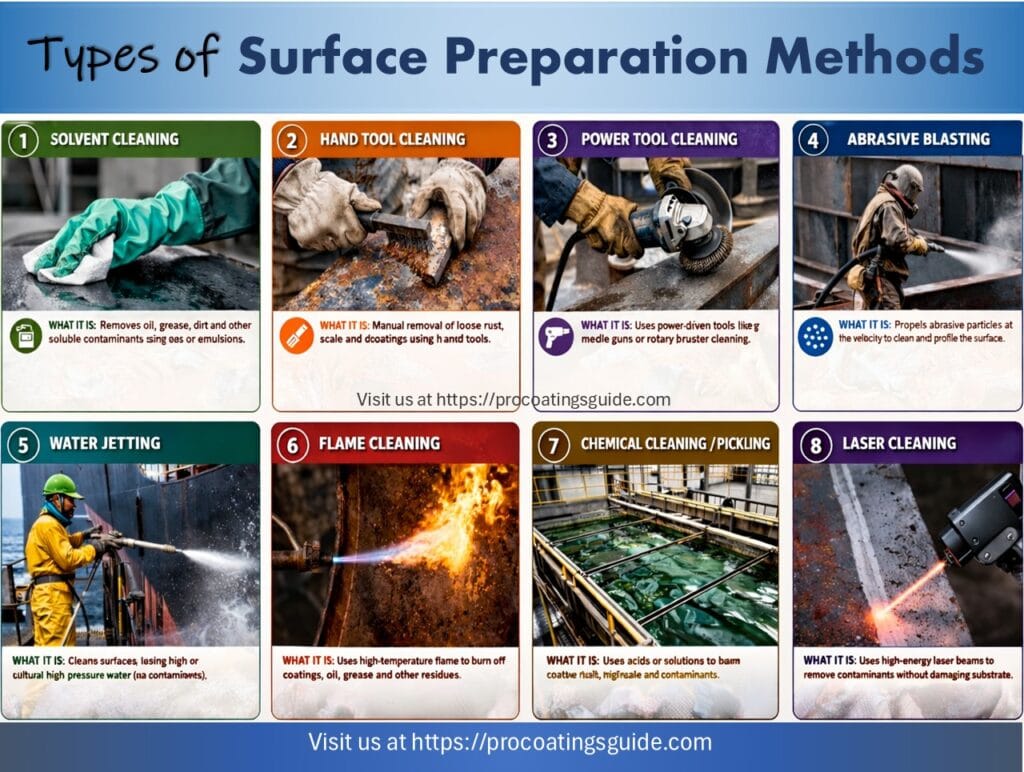
Main Types of Surface Preparation Methods
Surface preparation methods can be broadly classified into the following categories:
1. Solvent Cleaning:
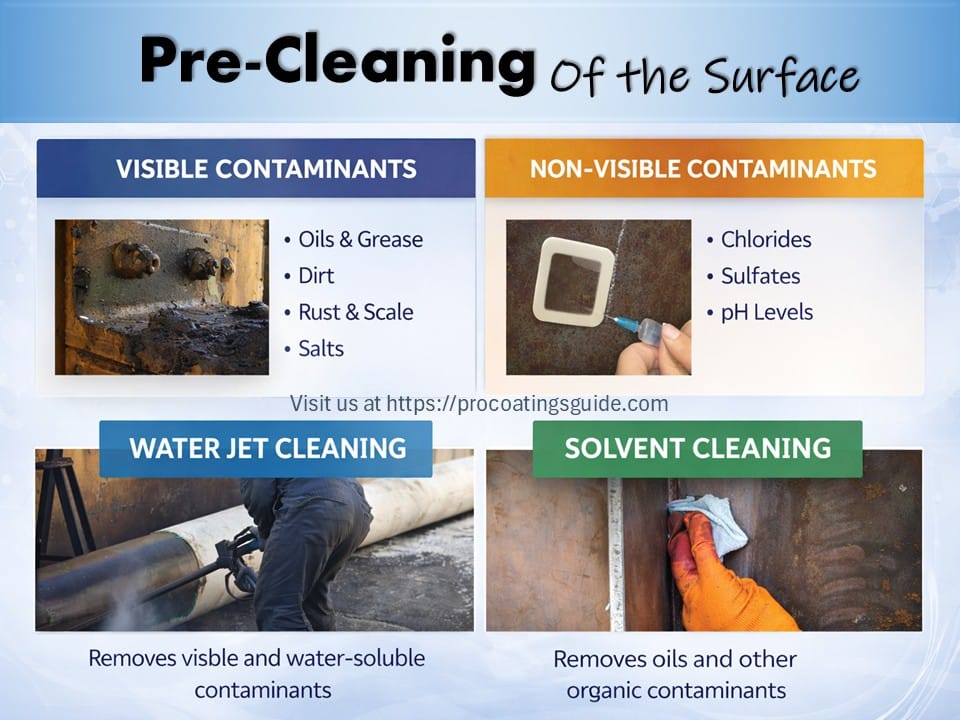
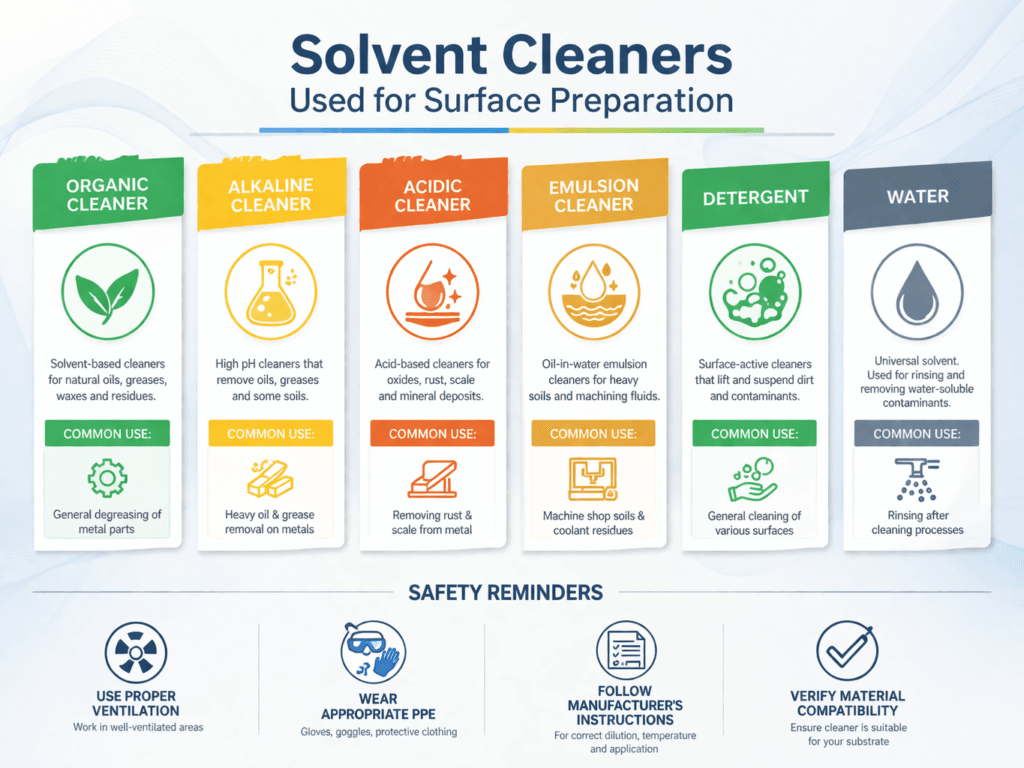
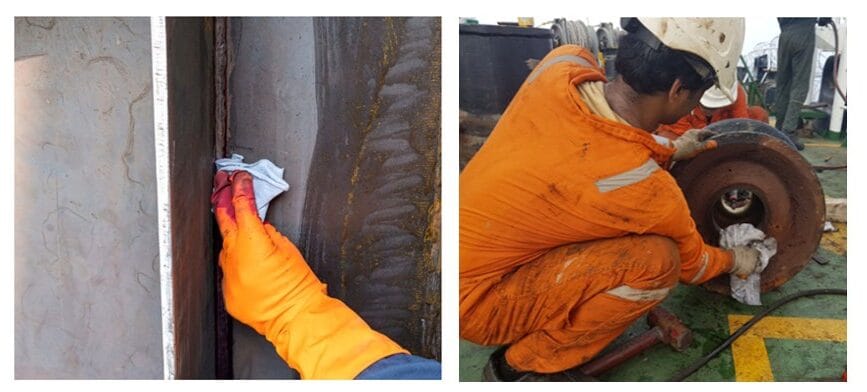
Solvent cleaning is a form of surface preparation that uses chemical solutions to remove visible contaminants from a surface.
Common Techniques
- Wiping with solvent-soaked cloths
- Vapor degreasing
- Emulsion cleaning
Applications
- Pre-cleaning before abrasive blasting
- Maintenance painting
- Equipment and machinery
Limitations:
- Does not remove rust or mill scale
- Often used as a preliminary step
▶️ Detailed Article on Solvent Cleaning…Click Here
2. Hand Tool Cleaning
Hand tool cleaning involves manually chipping, scraping, brushing, and sanding the surface to remove foreign material. Hand tool cleaning can typically remove all loose mill scale, coatings, rust, and other loose detrimental materials. Adherent materials cannot generally be removed by this process in a high production environment.
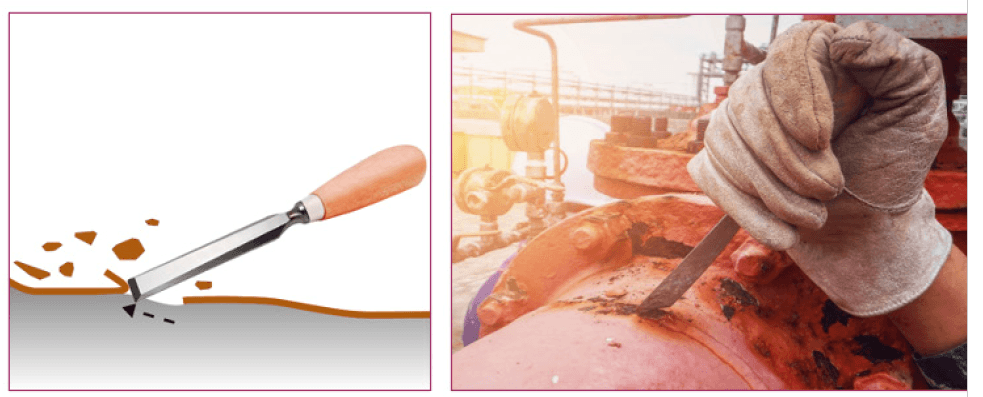
Hand Tools Applications:
There are several situations when hand tools are used for surface preparation, such as when:
- Power tools are not available or not allowed for the job.
- The surface is in a hard-to-reach spot or complex configuration that power tools cannot access.
- It is a small surface area that doesn’t require power tools
Tools Used:
- Wire brushes
- Scrapers
- Sandpaper
Limitations
- Cannot be used for most high-performance coating systems or systems that require a truly clean substrate.
- No anchor profile created
- Hand tools are used in conjunction with power tool cleaning in order to achieve the desired level of cleanliness
▶️ Detailed Article on Hand Tool Cleaning…Click Here
3. Power Tool Cleaning
Power tool cleaning, on the other hand, can typically remove loosely (SSPC-SP 3) and tightly adherent (SSPC-SP 11, and SP 15) mill scale, rust, paint, and other foreign matter, depending on the tool used. This is due to power tools utilizing mechanical force to impact, grind, sand, cut, scale, and brush the surface.
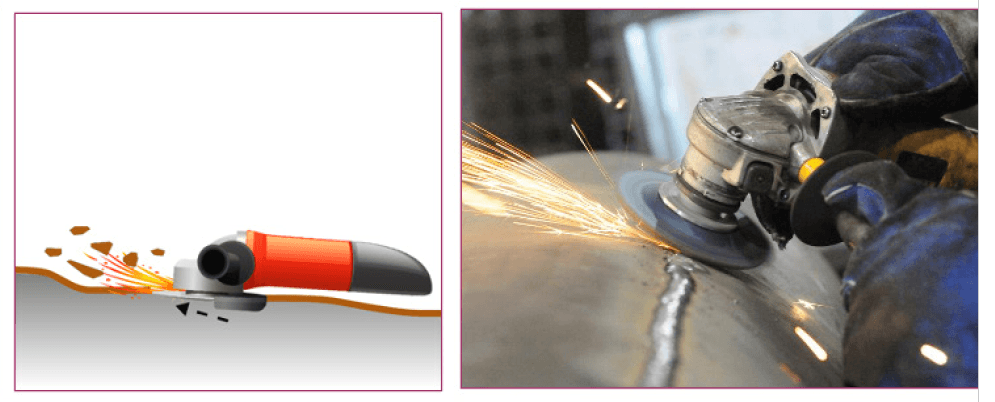
Power tools clean by impact and/or abrasion and are used frequently for small repairs or spot cleaning of damaged coatings.
Advantages of Power Tool Cleaning:
- Can be performed in tight spaces.
- Can be used around sensitive equipment when abrasive blasting is not an option and in confined spaces, if the tools are intrinsically safe.
- Suitable for small areas when blasting would be inefficient or for spot repairs of damaged coatings.
- To prepare the surface prior to abrasive blasting
- Cleaning challenging areas (e.g., gaps, bolts, threads)
- Rectifying surface defects (e.g., laminations, inclusions)
- Rectifying fabrication defects (e.g., sharp edges, weld spatter)
- Can create a surface (anchor) profile depending on the tool – however, the surface profile is rarely as uniform as the profile that can be achieved with abrasive blasting
Limitations of Power Tool Cleaning:
- Low productivity.
- Can not create desired surface profile.
- The power tool media wears out quickly and must be replaced frequently during the
cleaning process if the surface area to be cleaned is very large. - Also, some power tool cleaning methods cannot remove tightly adhered mill scale, paint, or rust. And finally, different tools leave very different textures on the surface.
▶️ Detailed Article on Power Tool Cleaning…Click Here
4. Abrasive Blasting
Modern coatings require both a clean and roughened surface if they are to have long-term stability. While there are several cleaning methods used to prepare surfaces, the most common and the most effective method is abrasive blasting. Abrasive blasting refers to the propelling of an abrasive media, either dry or suspended in a liquid, through a nozzle to clean, shape, roughen or smooth a surface.
Dry abrasive blasting removes rust, mill scale, or other visible surface contaminants to create a roughened surface or angular profile by using highly pressurized air in combination with abrasives.
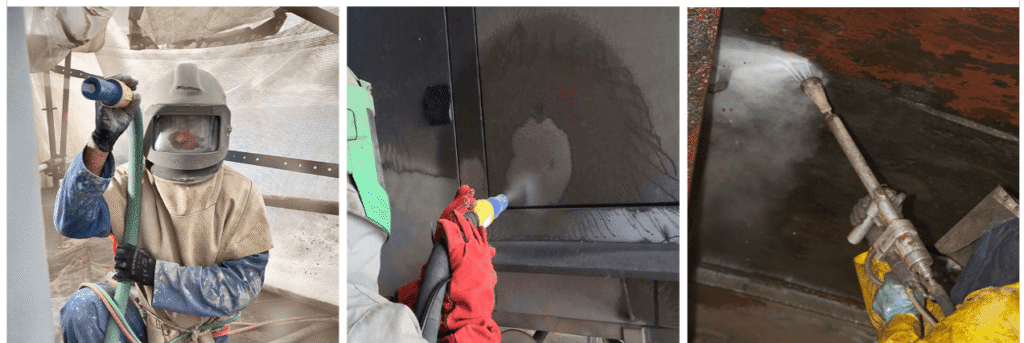
Types of Abrasive Blasting
- Dry blasting
- Wet blasting (slurry blasting)
- Vacuum blasting
Advantages:
- Abrasive blasting provides a superior level of cleanliness compared to surfaces prepared with hand or power tools, and it increases the service life of the coating over power tools.
- Abrasive blasting also provides an excellent surface profile for good coating adhesion.
- It is very efficient to operate because an operator can prepare a large surface area (thousands of square feet/meters) in a single work shift.
- Another advantage of dry abrasive blasting is that it leaves the blasted surface dry until coating application unless there is considerable humidity in the work area
Limitations:
- Higher pressure operations needs proper safety considerations.
- Abrasive blasting is that when an abrasive impacts a hard surface, the abrasive particle often breaks or shatters, propelling finer particles into the air as dust.
- Respiratory protection components/equipments required to protect from dusts generated during abrasive blasting.
▶️ Detailed Article on Abrasive Blasting…Click Here
5. Water Jetting
Waterjetting is particularly well suited for the marine industry and utility industries. For example, waterjetting can be used when extensive surface preparation and/or surface decontamination with minimal effect on the surrounding equipment and environment is required. In the marine industry, waterjetting is widely used to remove marine growth and exhausted antifouling coatings and is also effective in removing marine growth on the submerged sections of offshore structures
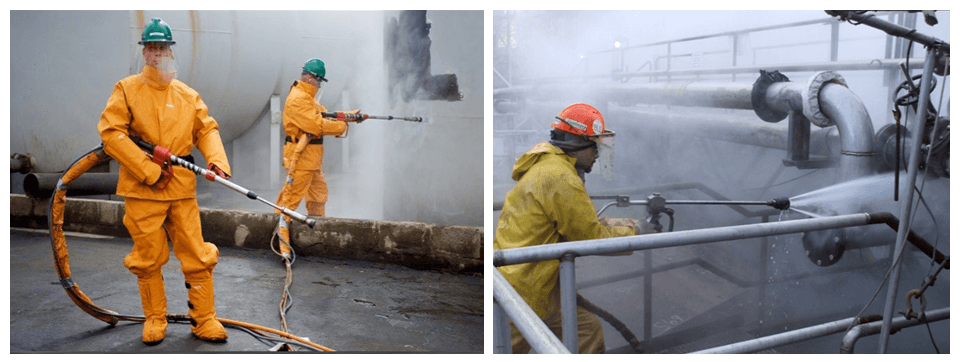
Ultra- high pressure waterjetting has become the preferred method of removing non-visible contaminants (soluble salts) in the industry today. Additionally, ultra-high waterjetting has become the preferred method of removing old coatings, especially flexible coating films such as elastomeric polyurethane and polyureas that are very difficult and expensive to remove by abrasive blast cleaning.
Applications
- Maintenance projects
- Environments where dust must be minimized
- Surface cleaning without damaging substrate
Pressure Categories
- High Pressure (HP)-pressures from 70 to 210 MPa or 10,000 to 30,000 psig.
- Ultra High Pressure (UHP) – pressures above 210 MPa or 30,000 psig.
Limitations:
- While water jetting will remove contaminants and mill scale at varying pressures, it will not create a surface profile.
- Highly skilled operators are needed for water jetting.
- The possibility of flash rusting after the process is completed. Applying water to the steel surface creates natural conditions for corrosion of the substrate.
▶️ Detailed Article on Water Jetting…Click Here
6. Flame Cleaning
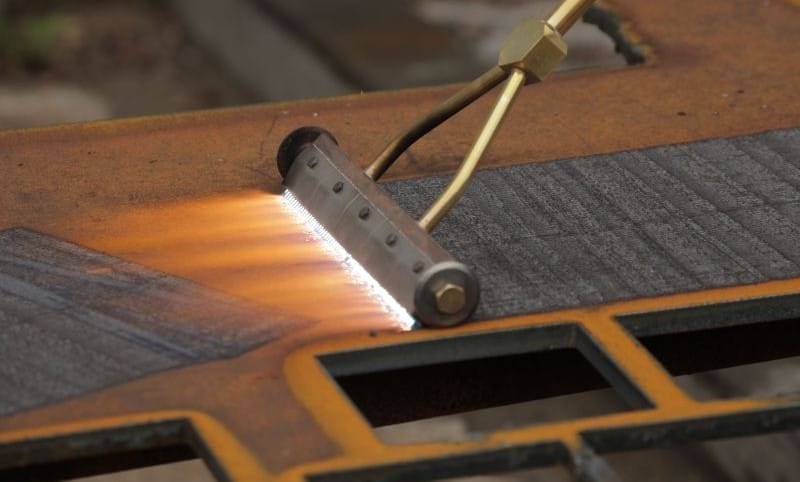
Flame cleaning is a thermal surface preparation technique used to remove contaminants such as oil, grease, old coatings, and moisture from metal surfaces by applying a high-temperature flame. It is commonly performed using oxy-fuel gas torches (typically oxy-acetylene or oxy-propane), which generate intense heat to treat the substrate.
How It Works
- A high-temperature flame is passed evenly over the surface
- Heat causes contaminants to oxidize or vaporize
- Residues are either burned off or loosened for easy removal
- Surface is often followed by brushing or wiping to remove remaining debris
Advantages
- Quick removal of oil and grease
- Effective drying of surfaces in humid environments
- Useful for localized cleaning
- No abrasive media required
Limitations
- Does not remove heavy rust or thick coatings effectively
- No surface roughness (profile) for coating adhesion
- Risk of overheating or warping thin materials
- Requires skilled handling and strict safety precautions
Typical Applications
- Pre-cleaning before abrasive blasting
- Maintenance work in fabrication shops
- Field applications where blasting is not feasible
- Surface drying in high-humidity conditions
▶️ Detailed Article on Flame Cleaning…Click Here
7. Chemical Cleaning/Pickling
Chemical cleaning, commonly known as pickling, is a surface preparation method that uses chemical solutions—primarily acids or alkaline cleaners—to remove contaminants such as rust, mill scale, oxides, and grease from metal surfaces. It is widely used when a uniform, contaminant free surface is required prior to coating, galvanizing, or further processing.
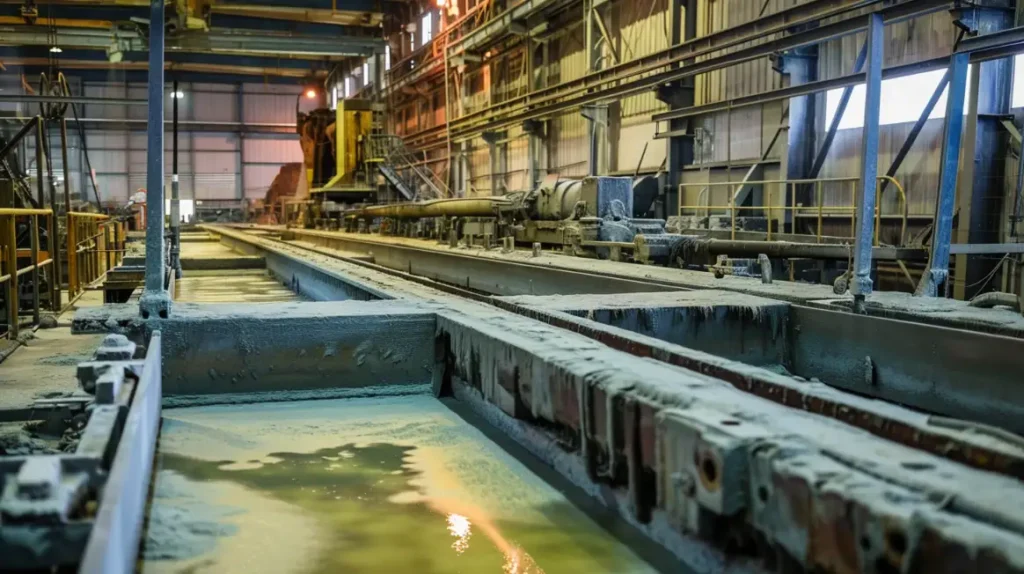
Pickling involves immersing or applying a chemical solution to a metal surface to dissolve unwanted materials. The process is especially effective for removing rust, corrosion products, Mill scale, Oxide layers on metals, Oil, grease, and dirt (with pre-cleaning steps). Unlike mechanical methods, pickling works at a molecular level, ensuring deep and consistent cleaning even in complex geometries.
Advantages
- Removes deep-seated rust and mill scale effectively
- Provides uniform cleaning across entire surface
- Ideal for complex shapes and internal surfaces
- Can be automated for large-scale industrial processes
Limitations
- No surface profile for coating adhesion (may require additional treatment)
- Risk of over-pickling, leading to metal loss
- Requires careful handling of hazardous chemicals
- Disposal and environmental compliance are critical
Typical Applications
- Steel processing plants and fabrication units
- Pre-treatment before galvanizing or electroplating
- Cleaning of pipelines, tanks, and structural components
- Maintenance and refurbishment of corroded equipment
▶️ Detailed Article on Chemical Cleaning/ Pickling…Click Here
8. Laser Cleaning
Laser cleaning is an advanced, non-contact surface preparation technique that uses high-energy laser beams to remove contaminants such as rust, oxides, oil, grease, and coatings from metal and non-metal surfaces. It is a precision-driven and environmentally friendly method increasingly adopted in modern industries.
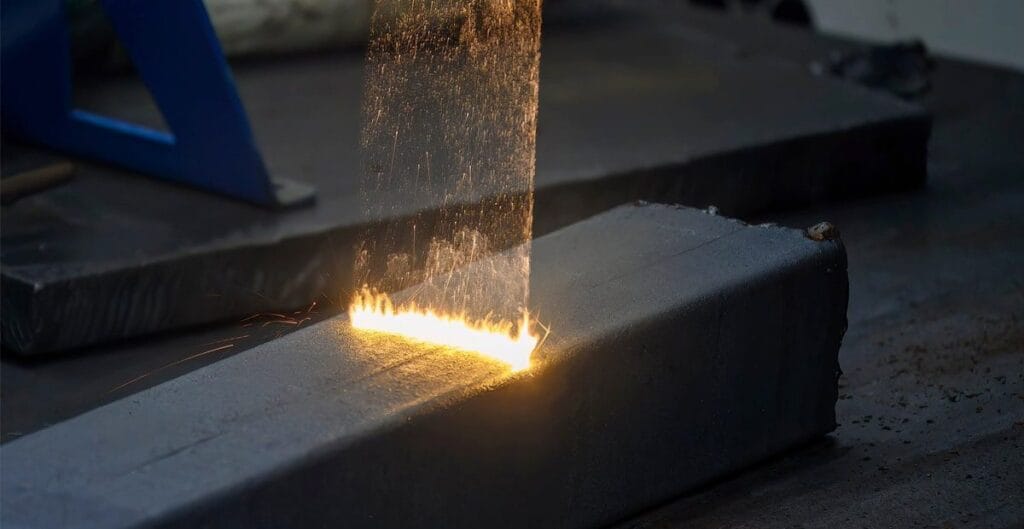
Laser cleaning works by directing short, high-intensity laser pulses onto a surface. These pulses interact with contaminants and vaporize unwanted layers like rust, paint, oxides. It break the bond between contaminants and substrate and leave the base material largely unaffected. This makes it ideal for applications where accuracy and surface integrity are critical.
Advantages
- Non-abrasive and non-contact (no surface damage)
- No chemicals or secondary waste (eco-friendly)
- Highly precise—ideal for delicate or complex components
- Minimal maintenance and operational consumables
- Can selectively clean specific areas without affecting surroundings
Limitations
- High initial equipment cost
- Slower for large surface areas compared to blasting
- Requires trained operators and safety controls
- Limited effectiveness on very thick coatings (may require multiple passes)
Typical Applications
- Rust and oxide removal from precision components
- Cleaning molds, dies, and tools in manufacturing
- Aerospace and automotive component maintenance
- Restoration of historical artifacts and monuments
- Pre-weld and pre-coating surface preparation